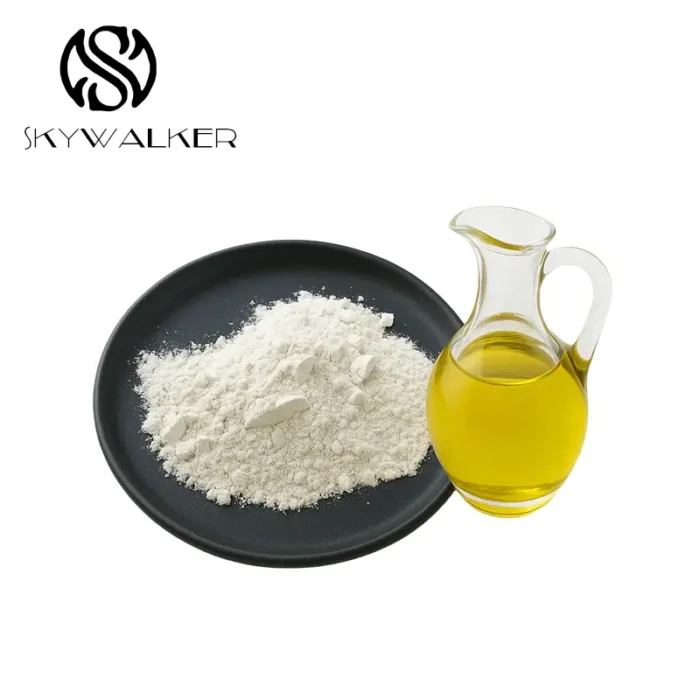
Embarking
Considering particular supply position, siliceous sediment and filter aid embody every critical feature in multiple processes across the expansive range of areas. Research indicates that persistent performance depends on grasping the individual parameters of the material – its mesh size, void fraction, and filter rate. Optimizing these variables is vital to realizing desired brightness and competence in the separation process. Additionally, maintaining airborne dust is a significant detail for worker safety and environmental regulations.
Finding the Right Diatomite Filter Aid Supplier
Finding a credible diatomite distributor for filtration tasks can significantly affect product consistency and production effectiveness. Investigate attributes including material rank, size distribution, inventory, tariffs, and client handling when choosing. Avoid ignoring engineering proficiency and delivery potential – an excellent provider supplies more than mere products. Finally, establishing a solid connection with an experienced diatomite screening firm will aid your continued achievement.
Other Applications of Diatomaceous Earth Outside Filtration
Even if primarily acknowledged for its use in purification systems, siliceous powder demonstrates significantly wide further activities. Beyond liquid handling fields, this organic material assists gardening, acting as a safe pesticide and soil conditioner. Also, its exceptional permeable structure proves beneficial for animal diet, promoting nutrient uptake. Buyers notice this substance within cosmetic formulations serving as a mild polisher or drying agent. Fundamentally, the breadth of DE continues to astonish practiced analysts.
- Cultivation
- Livestock Nutrition
- Skin Care
Quality Control in Diatomite Filter Aid Production
Preserving constant product excellence in filter aid fabrication depends on meticulous quality checks. Such controls initiate with the source material, covering examination of grain range, permeability, and moisture presence. Throughout the milling and calcination stages, continuous monitoring for whiteness, bulk density, and flowability is critical. Completed material lots experience comprehensive examination following standardized methods, frequently including grain dimension analysis via light diffraction and specific area calculation.
- Validation of cleanliness remains central
- Frequent evaluations of apparatus occur
- Accountability of components is secured
Universal Diatomaceous Earth Trade: Patterns and Vendors
The international diatomaceous market currently experiences major growth prompted by rising demand among multiple domains. Prominent drivers cover elevated employment in separation procedures, farming pest reduction, and as moisture-removing materials. Several major manufacturers are actively investing in research & development to enhance product quality and expand their market. Key firms including EP Minerals, Imerys, Grant Prideaux hold an important function influencing the trajectory of diatomite industry.
Picking a Kieselguhr Clarifying Substance: Important Points
While choosing a celite screening agent for your application, important elements require evaluation. The particle size distribution is paramount, directly impacting filtration rate and clarity of the filtered liquid. Examine the separation machinery's strain capacity; larger types perform in low forces, while delicate models tolerate greater pressures. What's more, the kieselguhr's cleanliness and bulkiness affect processing parameters. Finally, assess the cost and availability of different grades to optimize your overall filtration efficiency.
- Pore Range
- Filtering Apparatus Pressure Resistance
- Purity and Mass Density
- Expense and Supply Condition
Sustainable Acquisition of Diatomite
Promoting lasting viability in silica earth mining entails a devoted pledge to ethical collection procedures. Earlier, diatomite extraction introduced ecological challenges including ecosystem degradation and resource depletion. So, leading manufacturers employ approaches softening those results. Such measures span restoring disturbed land, conserving liquids, and supporting community projects. Moreover, ethical procurement could involve verifications by third-party bodies, proving compliance with rigorous ecological guidelines.
- Stress on ground recovery
- Lowering water use
- Supporting local development
Clarifying Agent Material: Elevating Filtration Capacity
Filter aid material functions as a clarification assistant, notably augmenting filtering efficiency within various operational systems. The processed silica produces a permeable bed above filter fabric, supporting elimination of small particulates from suspensions. As a result, cleanliness enhances and the total filter aid system is more efficient.
Understanding Diatomite and Production Workflow
Silica sediment, also termed fossilized powder, consists of sedimentary earth built from microscopic algae remains. Its unique structure provides exceptional absorbent qualities|Its distinctive composition delivers remarkable filtering properties|Its specialized makeup grants outstanding abrasive features|Its characteristic formation offers extraordinary absorbency traits|Its individual configuration yields superior filtering abilities|Its peculiar composition presents exceptional abrasive qualities|Its exclusive structure affords outstanding absorbent features|Its special makeup supplies remarkable filtering properties}. The manufacturing of diatomite begins with mining from open-pit mines|The production of siliceous earth starts with extraction from surface quarries|The processing of diatomaceous material initiates with excavation from open deposits|The fabrication of silica sediment originates with mining at surface pits|The creation of diatomite commences with quarrying from open-pit sites|The synthesis of siliceous material starts with surface mining|The making of diatomaceous earth begins with excavation of open deposits|The formation of silica earth starts with quarrying surface mines}. The raw material is then crushed and washed to remove impurities|The unprocessed substance is subsequently broken and cleaned to eliminate contaminants|The crude product undergoes grinding and rinsing to discard debris|The natural material is pulverized and cleaned to reject impurities|The unrefined matter is crushed and washed to clear contaminants|The original compound is ground and cleansed to eradicate debris|The raw component is broken down and rinsed to remove impurities|The crude sample is pulverized and cleaned to eliminate contaminants}. Following washing, material undergoes drying to reduce moisture content|After cleaning, substance experiences evaporation to lessen dampness level|Post rinsing, product endures heat treatment to decrease water amount|Following cleansing, compound passes drying phase to cut down moisture presence|After washing, material goes through evaporation process to lower dampness content|Post cleaning, matter undergoes heating phase to reduce water level|Following rinsing, product experiences drying step to minimize moisture amount|After purification, substance passes heat treatment to decrease water presence}. Finally, it is milled into various sizes to meet application needs|Ultimately, it is ground into different grades to satisfy diverse demands|Concluding, it is pulverized into specific ranges to fulfill usage requirements|Eventually, it is milled into assorted distributions to accommodate different uses|In the end, it is ground into multiple sizes to adapt to application specifications|Finally, it is pulverized into varied grades to meet demand characteristics|Ultimately, it is milled into distinct ranges to fit use requirements|Eventually, it is ground into assorted distributions to conform with application needs}.
Comments on “How can beer filtration aid help maintain consistency across different brewing batches?”